 Login
Login

Agricultural Drone Spraying — Pesticide Application, Safety & Awareness
- System Administrator |
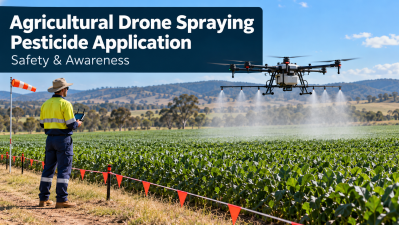
Agricultural Drone Spraying — Pesticide Application, Safety & Awareness
Develop your understanding of the hazards, responsibilities and safety controls involved in applying pesticides with agricultural drones. This course explains how to recognise risks, check product information, plan applications, prevent exposure and protect people, neighbouring properties and the environment.
Presented in an Australian context, the course explores the separate roles of aviation permissions, pesticide-use requirements and workplace competence. Detailed explanations, diagrams, videos and practical scenarios help learners connect safety principles to agricultural work.
What you will learn
By the end of the course, you should be able to:
- Distinguish aviation permissions, chemical-use requirements and workplace responsibilities.
- Explain how pesticide labels, permits and safety data sheets support safe decisions.
- Recognise chemical exposure, rotor, payload and battery hazards.
- Identify site, weather, spray drift and pollinator protection considerations.
- Explain the difference between pesticide dose and total spray volume.
- Understand basic calibration principles through clean-water calculation exercises.
- Describe safe handling, loading, hygiene, clean-down and waste controls.
- Recognise re-entry, withholding, residue and recordkeeping requirements.
- Identify emergency priorities and when to stop work and seek assistance.
Course modules
| Module | Topics covered |
|---|---|
| 1. Safety foundations | Awareness scope, responsibilities and pest-management decisions |
| 2. Australian permissions | Aviation, product-use and state or territory requirements |
| 3. Product information | Labels, permits, safety data sheets and application restrictions |
| 4. Exposure prevention | Health hazards, protective equipment and hygiene |
| 5. Site planning | Sensitive areas, boundaries, access and communication |
| 6. Weather and drift | Weather monitoring, inversions, buffers and pollinator protection |
| 7. Drone safety | Aircraft inspection, payload, batteries and automation limitations |
| 8. Calibration awareness | Flow, speed, effective swath and application uniformity |
| 9. Handling and loading | Storage, transport, preparation and contained transfer |
| 10. Application monitoring | Interruptions, re-entry, residues and resistance awareness |
| 11. Clean-down and waste | Equipment contamination, rinsate and environmental protection |
| 12. Emergency readiness | Exposure response, crashes, battery incidents and records |
Who should enrol?
Farmers, agricultural workers, contractors, supervisors, landholders, chemical handlers, loaders and drone support crew seeking an introduction to responsible pesticide application by agricultural drones.
Delivery and assessment
- Duration: Approximately 4–5 hours, self-paced.
- Delivery: Online learning with 14 diagrams, two embedded videos, direct video links and additional reading.
- Activities: Workplace scenarios, knowledge checks, private study notes, two clean-water calculators and printable checklists.
- Assessment: 30 questions, with an 80% pass mark and unlimited retries.
- Completion: Review all 12 modules and pass the final assessment.
- Entry requirements: No previous drone experience required for awareness learning; basic numeracy is helpful.
Course status
This is a non-accredited awareness course. Completion does not provide a drone pilot licence, operator approval, chemical-use qualification or practical competency certification. The course does not supply pesticide mixing recipes or recommended operating settings. Actual work requires the applicable permissions, current product directions, authorised procedures and practical training.
Course Information
Coaches

System Administrator