 Login
Login

Fire Safety and Handling — Workplace Awareness
- System Administrator |
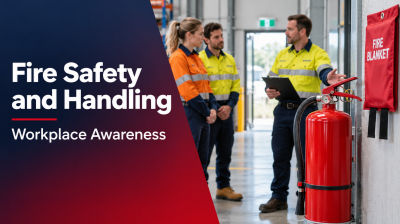
Fire Safety and Handling — Workplace Awareness
Develop your understanding of workplace fire hazards and the actions that help protect people during an emergency. This course explains how to prevent fires, recognise warning signs, raise the alarm, evacuate safely and understand the limits of portable firefighting equipment.
Presented in an Australian workplace context, the course uses detailed explanation notes, diagrams, official videos and practical scenarios to support informed safety decisions. It emphasises putting people before property and acting within your training and workplace procedures.
What you will learn
By the end of the course, you should be able to:
- Recognise common ignition sources, fuels and smoke hazards.
- Identify Australian fire classes and explain why equipment must match the hazard.
- Describe fire prevention, housekeeping and defect-reporting practices.
- Explain alarm, emergency notification and safe evacuation arrangements.
- Recognise the importance of planned assistance and accounting for everyone.
- Explain when not to attempt extinguishment and what PASS means.
- Describe fire blanket, cooking-fire and hose-reel limitations.
- Identify battery, gas and chemical incidents requiring specialist response.
- Recognise basic burns and smoke-exposure first-aid priorities.
- Explain how drills, incident reviews and corrective actions improve readiness.
Course modules
| Module | Main topics |
|---|---|
| 1. Safety responsibilities | Roles, people-first decisions and awareness-training limits |
| 2. Fire development | Fire triangle, heat transfer and smoke hazards |
| 3. Fire classes | Australian classifications, equipment ratings and dangerous mismatches |
| 4. Fire prevention | Housekeeping, electrical defects, flammable materials and hot work |
| 5. Equipment readiness | Alarms, fire doors, clear exits and maintenance responsibilities |
| 6. Emergency notification | Recognising fire, raising the alarm and calling 000 |
| 7. Safe evacuation | Escape routes, inclusive assistance, assembly and accountability |
| 8. Extinguisher awareness | Intervention conditions, PASS and withdrawal decisions |
| 9. Special equipment | Fire blankets, cooking fires and hose-reel limits |
| 10. Higher-risk incidents | Batteries, gases, chemicals and specialist hazards |
| 11. First-aid awareness | Burns, smoke exposure, rescuer safety and casualty handover |
| 12. Workplace readiness | Safe drills, reporting, authorised re-entry and review |
Who should enrol?
Employees, supervisors, contractors, volunteers and anyone seeking an introduction to workplace fire prevention and emergency-response awareness. It suits offices, retail premises, warehouses, workshops and other workplaces when supplemented by their specific emergency arrangements.
Delivery and assessment
- Duration: Approximately 3–4 hours, self-paced.
- Delivery: Online learning with 14 diagrams, two embedded official videos, video links and further reading.
- Activities: Workplace scenarios, knowledge checks, study notes, printable checklists and a classroom safety decision aid.
- Assessment: 30 questions, with an 80% pass mark and unlimited retries.
- Completion: Review all 12 modules and pass the final assessment.
- Entry requirements: No previous fire safety experience required.
Course status
This is a non-accredited awareness course. Completion does not establish practical firefighting, fire warden, first-aid or equipment-servicing competency. Practical equipment use and assigned emergency roles require separate training and workplace authorisation. Learners must follow their actual emergency plan and emergency-service instructions.
Course Information
Coaches

System Administrator