 Login
Login

Agricultural Science — Soil Science and Plant Nutrition
- System Administrator |
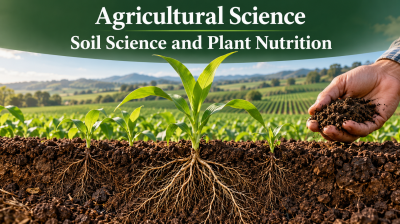
Agricultural Science — Soil Science and Plant Nutrition
Understand how healthy soil supports healthy plants and sustainable agriculture. This course introduces the physical, chemical and biological properties of soil and explains how they influence root growth, water availability and plant nutrition.
Designed for learners in Australia and worldwide, the course explores soil formation, texture, structure, organic matter and nutrient cycling. You will learn how soil pH, salinity, drainage and compaction affect crop performance, and why nutrient decisions should reflect local soils, climates, crops and laboratory results.
Detailed explanations, diagrams, videos, practical scenarios and worked examples help you connect agricultural science with everyday growing decisions.
What you will learn
By completing this course, you will be able to:
- Explain how soils form and identify their main components.
- Distinguish soil texture, structure, porosity and bulk density.
- Describe how soil water, aeration and drainage affect plant roots.
- Explain the importance of pH, nutrient exchange, salinity and sodicity.
- Describe how organic matter and soil organisms support nutrient cycling.
- Identify essential plant nutrients and explain their roles.
- Explain nitrogen transformations and pathways of nutrient loss.
- Understand phosphorus, potassium and other mineral nutrients.
- Describe representative soil sampling and interpret basic laboratory information.
- Recognise possible nutrient deficiencies, toxicities and other plant stresses.
- Perform basic nutrient-content and fertiliser-label calculations.
- Identify practices that support soil health and reduce environmental impacts.
Course modules
- Soil Systems, Formation and Global Context
- Texture, Structure, Porosity and Compaction
- Soil Water, Aeration, Roots and Drainage
- Soil Chemistry: pH, Exchange Capacity, Salinity and Sodicity
- Organic Matter, Organisms and Nutrient Cycling
- Essential Plant Nutrients and Root Uptake
- Nitrogen Forms, Transformations and Losses
- Phosphorus, Potassium and Other Mineral Nutrients
- Representative Sampling and Laboratory Interpretation
- Diagnosing Deficiency, Toxicity and Other Stresses
- Nutrient Planning, Fertiliser Calculations and Safe Handling
- Sustainable Soil Management and Your Field Study
Learning resources
The course includes detailed explanation notes, 14 diagrams, embedded videos and video links, module knowledge checks, practical scenarios, a glossary and additional study resources. Three interactive calculators support nutrient-content calculations, phosphorus and potassium reporting conversions, and soil bulk-density calculations. A printable study worksheet helps learners apply the concepts to a growing site.
Who should enrol?
Suitable for agricultural students, farmers, horticultural workers, gardeners, land managers and anyone interested in soil health, plant nutrition or sustainable food production. No previous soil-science knowledge is required.
Duration and assessment
| Item | Details |
|---|---|
| Estimated duration | 5–6 hours |
| Delivery | Self-paced online learning |
| Language | English, with metric measurements |
| Assessment | 30 multiple-choice questions with explanatory feedback |
| Pass mark | 80% |
| Completion requirements | Review all 12 modules and pass the assessment |
| Attempts | Unlimited retries |
| Course type | Non-accredited education and awareness |
This course develops foundational knowledge. Fertiliser application rates and soil-treatment decisions require crop-specific advice, suitable soil tests and local guidance.
Build your understanding of soil and plant nutrition to make better-informed growing decisions wherever you are in the world.
Course Information
Coaches

System Administrator